documentation complete adss cable enterprise procurement kits
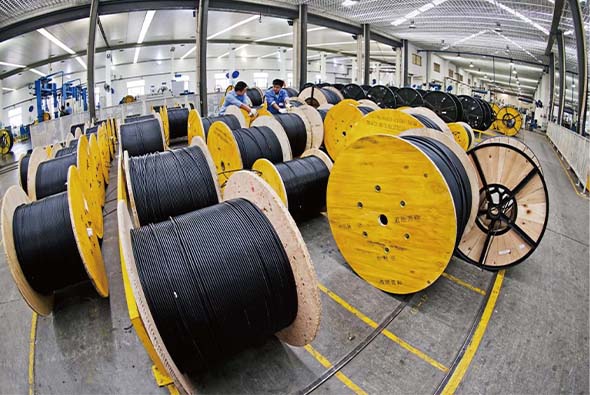
Photon-based cable has reinvented information-sharing approaches in the digital age.
Comprehending internal fiber optic deployments
Optical thread systems now occupy central roles in network design.Installing these cables inside buildings presents unique challenges and opportunities.Efficient optical cable installation copyrights on knowing components and following routing and termination best practices.A key consideration is choosing the correct cable type for bandwidth needs and use case.Moreover, qualified technicians need to observe stringent safety measures to prevent cable breakage
- Strategic planning and careful execution produce trouble-free in-building fiber installations
- Considerations like floorplan, legacy infrastructure, and projected bandwidth needs require evaluation.
- Proper termination techniques are critical to ensure signal integrity and reliable connectivity.
Linking the indoor fiber optic cable underserved
Outdoor optical cables act critically to close digital disparities.Installing high-capacity fiber networks throughout remote regions enables consistent access to resources for everyone.These networks are crucial to catalyze economic expansion, boost education outcomes, and connect communities digitally
Explaining Single-Mode and Multi-Mode Fiber Cables
For sending signals over long spans, fiber optic cabling is superior.They deliver better performance than copper via rapid transmission with tiny losses.Nevertheless, fiber cable varieties differ significantly.The market primarily comprises single-mode and multi-mode fiber options.
Single-mode fiber conducts one light path through the core, consistent with its name.Hence, signal dispersion is reduced, suiting it for extended distances with minimal loss.On the other hand, multi-mode fiber can support multiple modes of light simultaneously, leading to higher bandwidth capacity over shorter distances.Multi-mode cables are often utilized in local area networks where data transmission is primarily confined within a building or campus.
- So, the single- vs multi-mode choice depends on the distinct needs of the application.In scenarios needing very high bandwidth over long distances, single-mode is ideal.For building- or campus-scale high-throughput needs, multi-mode is typically the cost-effective choice.
Fiber Optic Strengths
Fiber optics have improved data transmission with a range of benefits.A top merit is their superior data-carrying capacity.Unlike traditional copper cables, fiber optics can transmit vast amounts of data over long distances with minimal signal loss.High-rate transmission makes fiber optimal for heavy-data uses including streaming, gaming, and cloud computing.Moreover, optical fiber is sturdy, resisting corrosion, damage, and electromagnetic interference.Their immune characteristics secure signal quality and consistent transmission in challenging environments.Furthermore, fiber optics offer enhanced security.Data over optical fiber tends to be well-protected and hard for attackers to intercept.This security advantage positions fiber as the go-to for confidential uses like financial and government communications.
Premium Fiber Optic Systems for Enterprise Use
Organizational networks require strong, trustworthy infrastructure for essential operations.Optical fiber has become preferred for businesses due to extraordinary bandwidth, low latency, and EMI immunity.Enterprise-grade fiber provides scalable and secure channels for data transmission, voice calls, and video.Modern enterprise solutions use multimode and single-mode duplex fibers to deliver high throughput for growing operational demands.Deploying fiber infrastructure helps businesses boost performance, lower operating costs, and sharpen competitive positioning.
- High-Performance Fiber Benefits:
- Remarkably High Data Capacity
- Minimal Delay for Time-Sensitive Apps
- Not Susceptible to Electromagnetic Noise
- Expandable Architecture for Growth
- Improved Protection for Transmissions
Protecting Your Network: Fiber Installation Guidelines
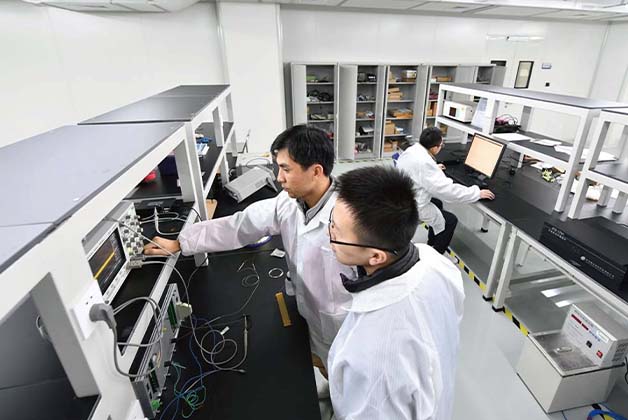
A strategically planned fiber installation is essential to secure network reliability.To protect investment value, implement the guidelines below:Consult with a qualified fiber optic installer to design a system that meets your specific needs.Employ high-quality, jacketed cables and components to minimize degradation and interference.Make certain of proper termination techniques to secure optimal transmission.Perform routine maintenance and testing to catch problems before escalation.
Fiber vs Exterior Fiber Cable: Primary Variations
Selecting the right optical cable is based on its planned application.Indoor fiber optic variants are tailored for building installs with strong bandwidth and low attenuation.They generally feature lighter materials and enhanced flexibility for simpler indoor installation.By contrast, outdoor fiber is constructed to endure severe environmental elements.They employ robust materials like UV-resistant jackets and specialized connectors to ensure reliable performance in rain, sun, and extreme temperatures.
Here's a quick look at the key distinctions:
- Material Selection: Indoor cables often use less durable materials due to their indoor environment, while outdoor cables prioritize ruggedness and environmental resistance
- Installation methods differ: indoor installs are generally simpler within controlled spaces; outdoor installs need specialized mounting, splicing, and weatherproofing methods
- Connector contrasts: indoor connectors suit controlled environments and frequent access; outdoor connectors are designed to withstand exposure and harsh conditions

Fiber Optic Industry Standards and Rules
Optical fiber markets depend on standards and regulations to assure interoperability and operational performance.Standards are promulgated by world organizations, notably ISO and IEEE.Important specifications include cable build, transmission parameters, connector standards, and testing processes.Regulations further intend to guarantee safety, reliability, and cross-system compatibility.
- Widespread industry adoption of these norms helps efficient design, manufacture, and deployment of fiber optic systems.
- Regulatory compliance reduces transmission faults and secures optimal throughput.
Future Directions in Fiber Technology
Fiber optics are set for significant transformation due to the surge in demand for higher bandwidth, lower latency, and enhanced protection.An important advancement is DWDM expansion, permitting huge numbers of signals on a single fiber to substantially raise network capacity.A further development is the implementation of advanced materials together with cutting-edge manufacturing methods.Research focuses on emergent materials like advanced glass fibers, plastic optical fibers, and photonic crystals to raise performance, strength, and efficiency.
Also, developers and researchers explore inventive fiber optic applications outside standard telecom/data roles.Examples include fiber optical sensing and monitoring systems for medical, industrial, and agricultural uses.

Fiber optics will likely become ever more central to future communication and technological developments.As these trends unfold, anticipate faster, higher-capacity, and more efficient networks, smarter connected systems, and extraordinary innovations across many sectors.
Pinpointing Fiber Cable Issues
Fiber networks provide excellent capacity and reliability yet remain susceptible to occasional issues.A methodical diagnostic approach helps pinpoint the reasons behind fiber network issues.This guide highlights typical indicators and remedies to help resolve fiber problems effectively.
Start your inspection by assessing the physical integrity of the fiber cables.Check for observable damage such as cuts, breaks, loose joints, or tight bends that degrade signal flow.
Use an optical power meter to evaluate signal levels at different positions along the fiber path.Off-spec readings often reflect attenuation or degradation possibly necessitating repair or cable replacement.Investigate connector surfaces for contamination that could reduce transmission performance.Clean connector endfaces using recommended fiber cleaning kits to ensure stable, secure links.