performance driven fiber optic cable solutions for enterprises
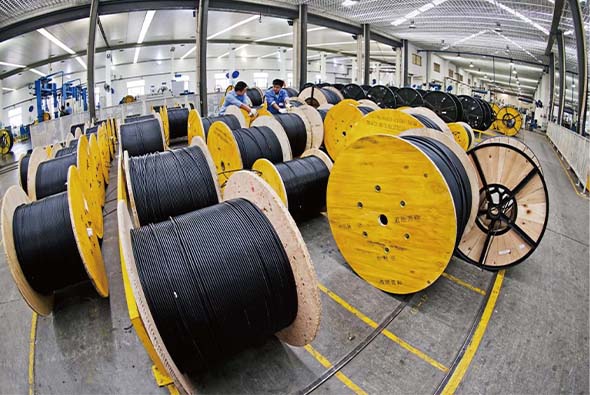
Lightwave communication strand has radically changed information-sharing approaches in modern communications.
Comprehending internal fiber optic deployments
Fiber-based cabling is fundamental to today's networked world.Installing optical fiber indoors brings particular challenges and advantages.Well-executed installations call for thorough component knowledge and routing/termination expertise.Choosing an appropriate cable type for required bandwidth and application is essential.Moreover, qualified technicians need to observe stringent safety measures to prevent cable breakage
- Thorough planning plus accurate execution deliver seamless in-building fiber deployments
- Variables like structural layout, present cabling, and forthcoming bandwidth needs need attention.
- Correct termination methods are vital for maintaining signal fidelity and dependable links.
Overcoming connectivity outdoor fiber optic cable gaps
Exterior photonic cabling is key to reducing connectivity disparities.Deploying robust fiber networks across underserved areas supplies uniform access to information for all.These networks are crucial to catalyze economic expansion, boost education outcomes, and connect communities digitally
Explaining Single-Mode and Multi-Mode Fiber Cables
For long-distance data transmission, optical fiber cables outperform alternatives.They offer superior performance compared to copper cables due to their ability to transmit signals at incredibly high speeds with minimal loss.However, different fiber cable types possess distinct characteristics.Single-mode and multi-mode constitute the two dominant fiber types.
Single-mode fiber confines transmission to a single light mode inside the core.Consequently, it minimizes dispersion, ideal for extended-range transmissions with little attenuation.In contrast, multi-mode supports several modes simultaneously, providing increased throughput over shorter spans.Multi-mode cables are often utilized in local area networks where data transmission is primarily confined within a building or campus.
- Thus, choosing single- or multi-mode fiber relies on exact application demands.Where high capacity and long-haul links are required, single-mode fiber is optimal.Conversely, for shorter distances and higher bandwidth needs within a limited area, multi-mode fiber provides a more cost-effective solution.
Advantages of Using Fiber Optic Cables
Fiber lines have changed data conveyance with abundant benefits.A significant benefit is their exceptional bandwidth availability.Compared to copper, fiber supports vast data throughput over long distances with low signal loss.The rapid transmission capability serves applications with large transfer needs like streaming, gaming, and cloud services.Moreover, fiber optic cables are highly durable, resistant to corrosion, damage, and interference from electromagnetic fields and environmental factors.This immunity secures signal fidelity and reliable data flow under harsh conditions.Additionally, fiber provides heightened data security.Data over optical fiber tends to be well-protected and hard for attackers to intercept.This secure nature renders fiber suitable for sensitive sectors like banking and governmental communications.
High-Capacity Fiber Solutions for Businesses
Enterprise networks demand robust and reliable infrastructure to support mission-critical applications.Fiber solutions top enterprise choices because of superior bandwidth, reduced latency, and immunity to interference.High-capacity fiber technologies supply businesses with scalable, secure transmission for data, voice, and media.Next-gen fiber offerings combine single-mode, multimode, and duplex technologies to sustain high-speed enterprise needs.Installing fiber networks empowers businesses to increase performance, trim costs, and improve competitive standing.
- Benefits of Enterprise Fiber Solutions:
- Remarkably High Data Capacity
- Reduced Latency for Real-Time Use
- Protected from EMI Effects
- Scalable Infrastructure for Expansion
- Improved Data Protection
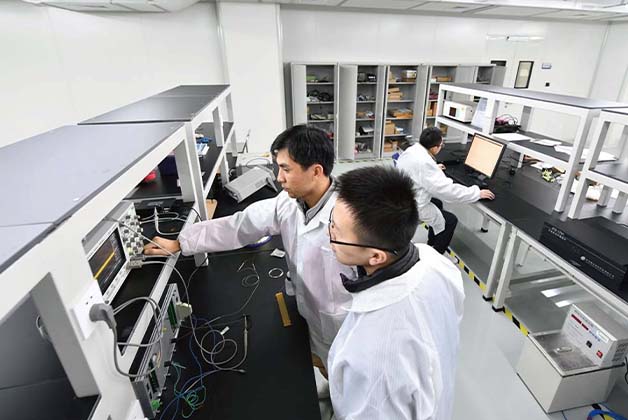
Safeguard Your Fiber Investment: Installation Tips
A strategically planned fiber installation is essential to secure network reliability.To maximize your investment, consider these best practices:Collaborate with certified fiber professionals to plan a solution fitting your requirements.Choose top-tier, shielded cables and components to curb signal loss and interference.Ensure proper cable termination techniques to maintain optimal data transmission.Conduct regular inspections, maintenance, and testing of your fiber optic network to identify potential issues before they escalate.
Indoor vs Outdoor Fiber: Major Distinctions
Choosing appropriate fiber is driven by intended usage.Indoor/Within-building/Internal fiber optic cables are designed for installations within buildings, offering high bandwidth and minimal signal loss.These variants commonly employ lightweight, flexible designs for easier installation in limited spaces.Conversely, outdoor fiber variants withstand rugged environmental factors and weather.They include rugged UV-stable sheathing and reinforced connectors for dependable outdoor operation.
Here is a short comparison of the key variations:
- Material choice: Indoor variants favor lighter, less tough materials suitable for controlled environments, whereas outdoor types emphasize rugged, weatherproof constructions
- Methods differ: indoor installation is routine and controlled; outdoor installation often involves specialized mounting, anchoring, and environmental safeguards
- Connector contrasts: indoor connectors suit controlled environments and frequent access; outdoor connectors are designed to withstand exposure and harsh conditions

Optical Fiber Cable Specifications and Guidelines
Fiber cabling industry uses formalized standards and regulations to secure consistent performance and compatibility.Standards come from global entities including ISO and the IEEE standards committees.Primary standards cover cable construction, transmission behavior, connector interfaces, and test methodologies.The regulations also seek to ensure safety, dependability, and interoperability across fiber systems.
- Commercial adoption of standards is vital to facilitate effective design, make, and implementation of fiber networks.
- Conformance reduces transmission faults and upholds efficient data transfer rates.
Future Trends in Fiber Optic Technology
Optical fiber tech faces major change propelled by growing appetite for more bandwidth, less latency, and stronger security.An important advancement is DWDM expansion, permitting huge numbers of signals on a single fiber to substantially raise network capacity.Another key trend is the integration of advanced materials and manufacturing processes.Researchers are constantly exploring novel materials that can improve the performance and reliability of fiber optic cables including glass fibers, plastic optical fibers, and photonic crystals with higher bandwidth, efficiency, strength.
Moreover, teams of researchers and engineers pursue innovative fiber uses beyond classic telecom and data transport.Examples include fiber optical sensing and monitoring systems for medical, industrial, and agricultural uses.
Fiber technology is expected to be more central to the future landscape of communications and beyond.As trends advance, expect networks to be faster, more efficient, and higher-capacity, devices to be smarter and more connected, and breakthroughs to emerge in numerous fields.
Troubleshooting Fiber Optic Cable Issues
Even with great bandwidth and reliability, fiber cabling can run into problems.Employing a structured troubleshooting routine is key to determining the origin of fiber connectivity problems.Here we describe typical symptoms and possible solutions for efficient fiber fault resolution.
Start diagnostics with a close inspection of cable physical condition.Look for physical harm, rupture, disconnected fittings, or tight bends that could harm transmission.
Use an optical power meter to evaluate signal levels at different positions along the fiber path.Measurement deviations could suggest excessive attenuation and potential need for fiber repair or replacement.Assess connectors for dirt, dust, or residue that may obstruct signal transmission.Use professional fiber cleaning tools to polish and clean connectors for dependable connections.